Describe the space
Property type, rooms, approximate volume, timing, and decision-maker.
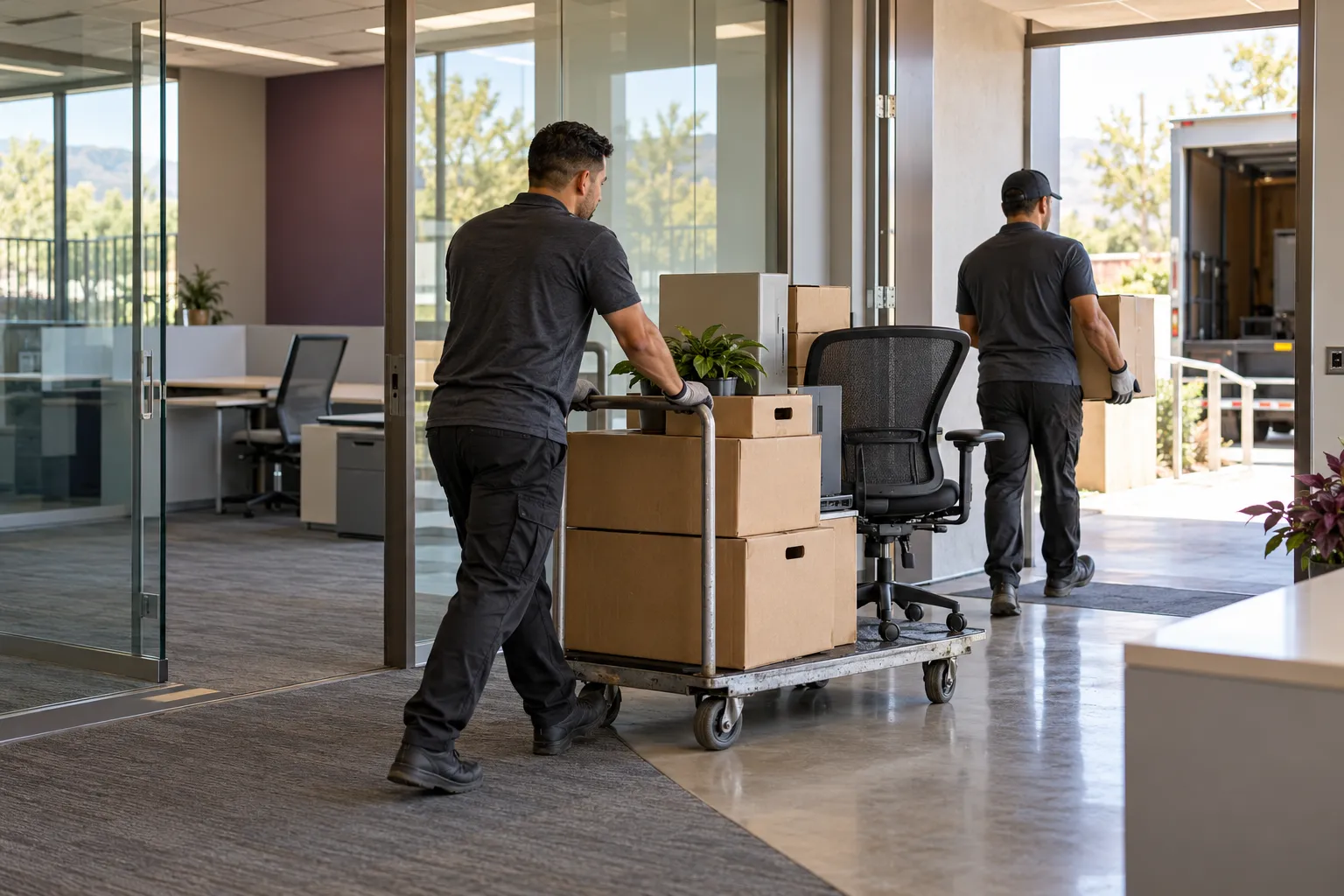
Clear offices, retail spaces, warehouses, furniture, equipment, and approved renovation debris with the access route and material stream considered before loading begins.
Each service separates the common items, preparation questions, and boundaries that can change the job plan.
 Commercial Junk RemovalOne-time removal for offices, stores, warehouses, managed properties, and other commercial spaces.View service
 Office CleanoutClear desks, chairs, cubicle parts, storage, boxed contents, and approved electronics around your building access plan.View service
 Retail Store CleanoutPlan a tenant turnover, remodel, or closure with fixtures, displays, inventory, and backroom contents sorted first.View service
 Warehouse CleanoutRemove approved pallets, packaging, worktables, freestanding storage, and boxed contents while protecting the loading lane.View service
 Commercial Furniture RemovalMove out desks, conference tables, seating, filing cabinets, and modular pieces with the route measured in advance.View service
 Construction Debris RemovalClear approved nonhazardous tenant-improvement and renovation debris after materials are identified and separated.View service
 Business Equipment RemovalRemove approved printers, appliances, electronics, and other decommissioned business equipment after data and power checks.View service

Commercial work can involve receiving hours, customer traffic, elevators, docks, gates, leased equipment, landlord property, and materials that cannot join an ordinary removal load.
The exact job varies, but the planning sequence stays readable.
Property type, rooms, approximate volume, timing, and decision-maker.
Separate ordinary contents from electronics, liquids, chemicals, and regulated items.
Loading, doors, elevators, stairs, parking, gates, and building rules.
Walk the approved scope and keep one authorized contact available.
Confirm final address coverage by email before relying on availability.
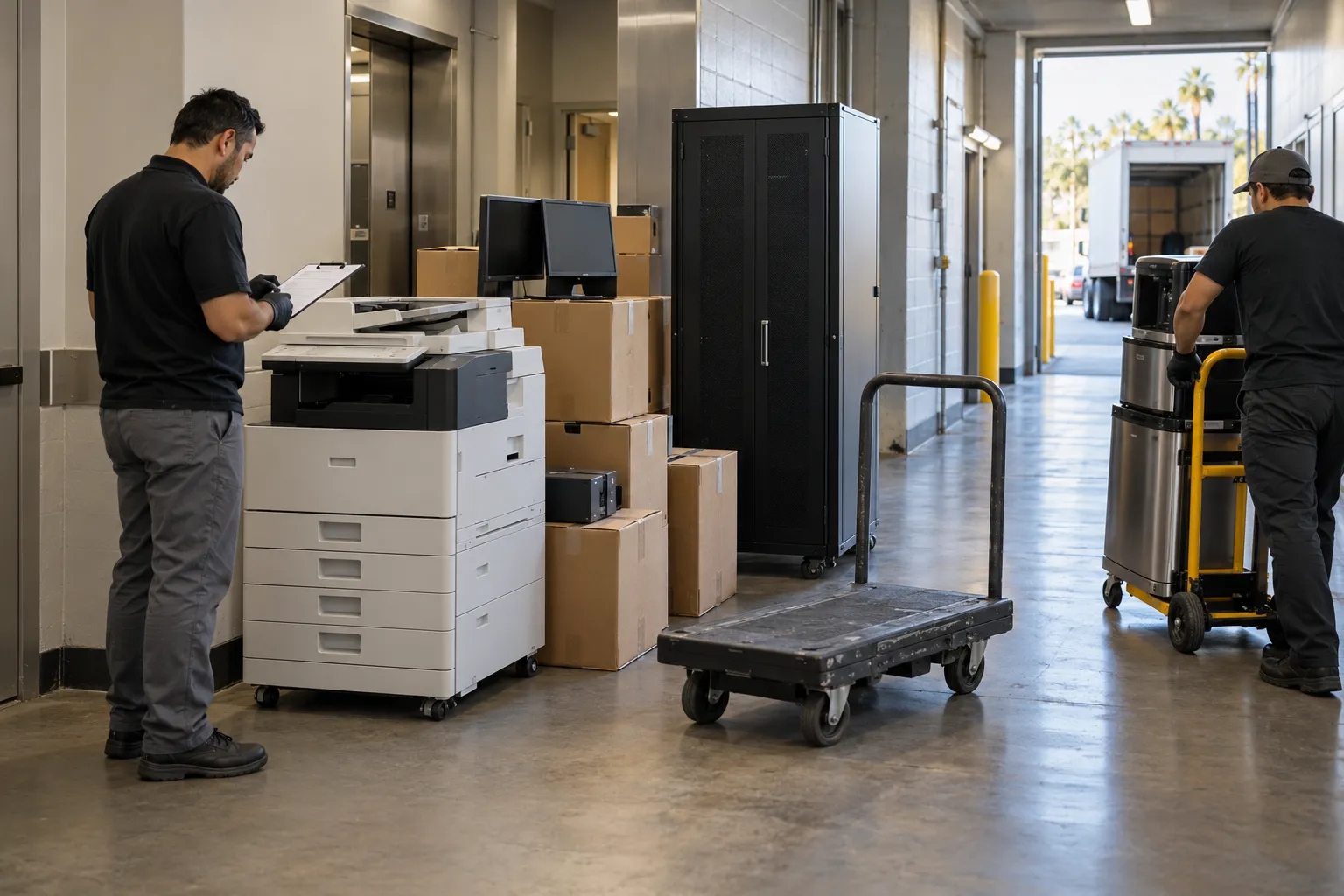
Back up data, identify leased devices, power equipment down, and arrange qualified disconnection for hardwired or plumbed units. California rules can treat some electronics as hazardous waste.
Read the electronics guideShare the property type, items, access route, timing, and any materials that may need separate handling. The team can use those details to plan the next conversation.