What to do with business electronics before a cleanout
Protect data, identify leases, disconnect equipment, and separate regulated e-waste before removal.
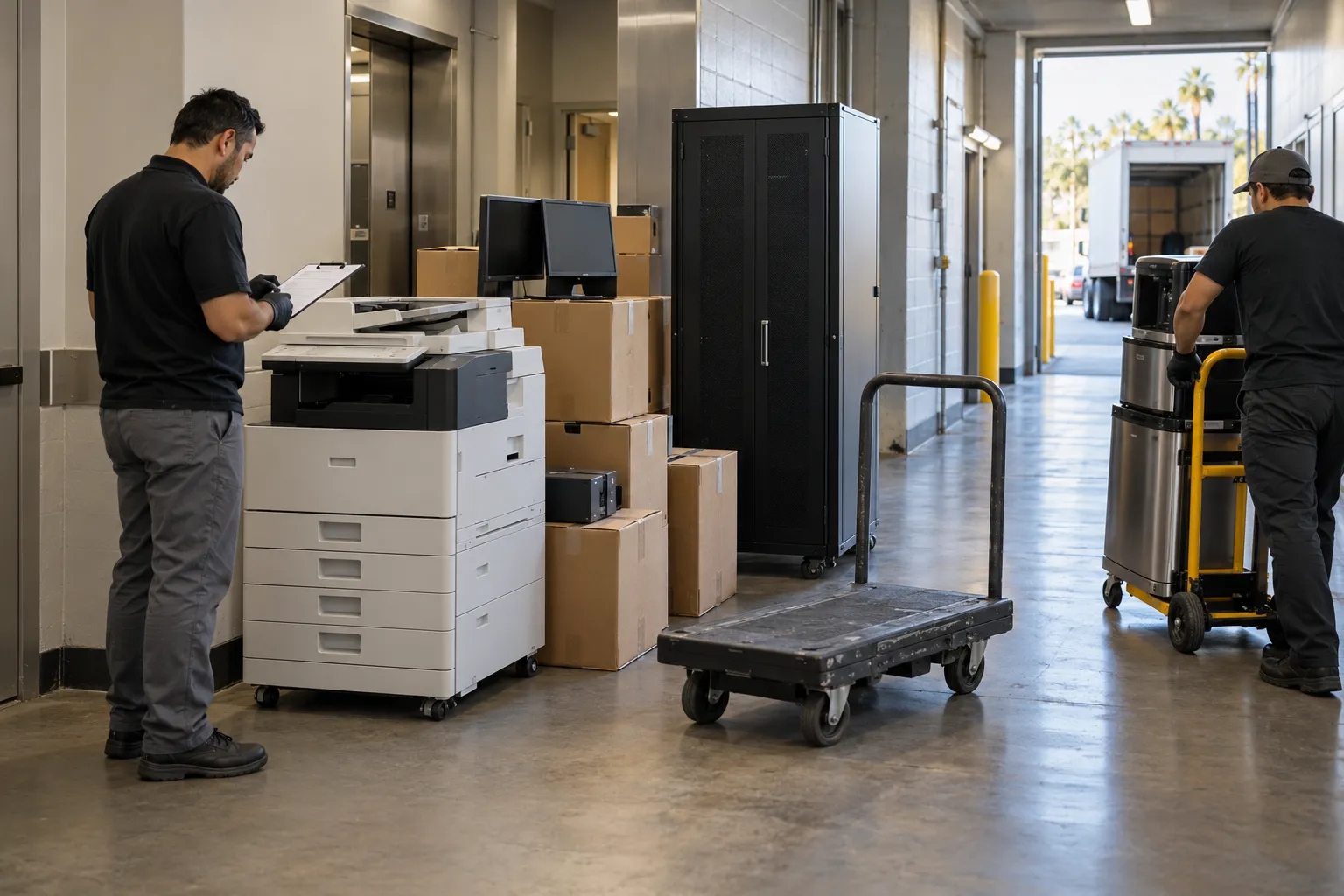
Business electronics need an information-security decision and a waste-handling decision. Finish both before the cleanout crew arrives.
Data and ownership come first
- Back up needed files and follow your organization’s data-destruction policy.
- Remove drives or have an approved specialist sanitize them.
- Check copier, printer, phone, and network-equipment leases.
- Power equipment down and have qualified trades disconnect hardwired units.
Separate electronics from general contents
California treats some discarded electronics and components as hazardous waste depending on their condition and contents. CalRecycle advises reuse when appropriate and directs businesses to qualified e-waste collectors. Review current guidance at CalRecycle’s electronic waste page.
List each device type, approximate quantity, dimensions, weight if known, and whether stairs or an elevator are involved. That gives the estimator enough detail to plan the correct equipment and downstream handling.
Create an equipment disposition register
List each device category, asset owner, serial or asset tag when required, data status, lease status, power condition, and approved destination. Separate equipment for internal reuse, vendor return, certified data destruction, electronics collection, and general non-electronic removal. The register gives information security, facilities, and the removal team one shared record.
Handle data before physical movement
Follow the organization’s policy for computers, servers, copiers, printers, phones, storage media, and multifunction devices. Many machines retain address books, scan histories, credentials, or local files. A factory reset is not automatically the same as approved sanitization. Record who completed the process and keep devices awaiting review in a controlled area.
Identify power, batteries, and refrigerants
Qualified personnel should disconnect hardwired, plumbed, or specialized equipment. Separate loose batteries and battery-powered devices, and flag damaged or swollen batteries for appropriate handling. Refrigerators, water coolers, laboratory devices, and some commercial appliances may contain refrigerants or other materials that change the disposal route. Do not cut cords or lines to make an item appear ready.
Prepare for pickup
- Remove paper, toner, liquids, accessories, and confidential labels as appropriate.
- Record dimensions and known weights for large printers, racks, and appliances.
- Measure the carry route and reserve dock or elevator access.
- Keep lease-return and reuse equipment physically apart from disposal items.
Ask the selected electronics collector what documentation it provides and what devices it accepts. California requirements and local programs can change, so confirm current rules rather than relying on an old office policy or a recycler’s outdated flyer.
Next step
Review the companion business equipment removal service, then use the commercial estimate checklist to prepare the job details.