How to stage a warehouse cleanout without blocking the loading lane
Use zones, decision ownership, and a protected travel lane to keep a warehouse cleanout controlled.
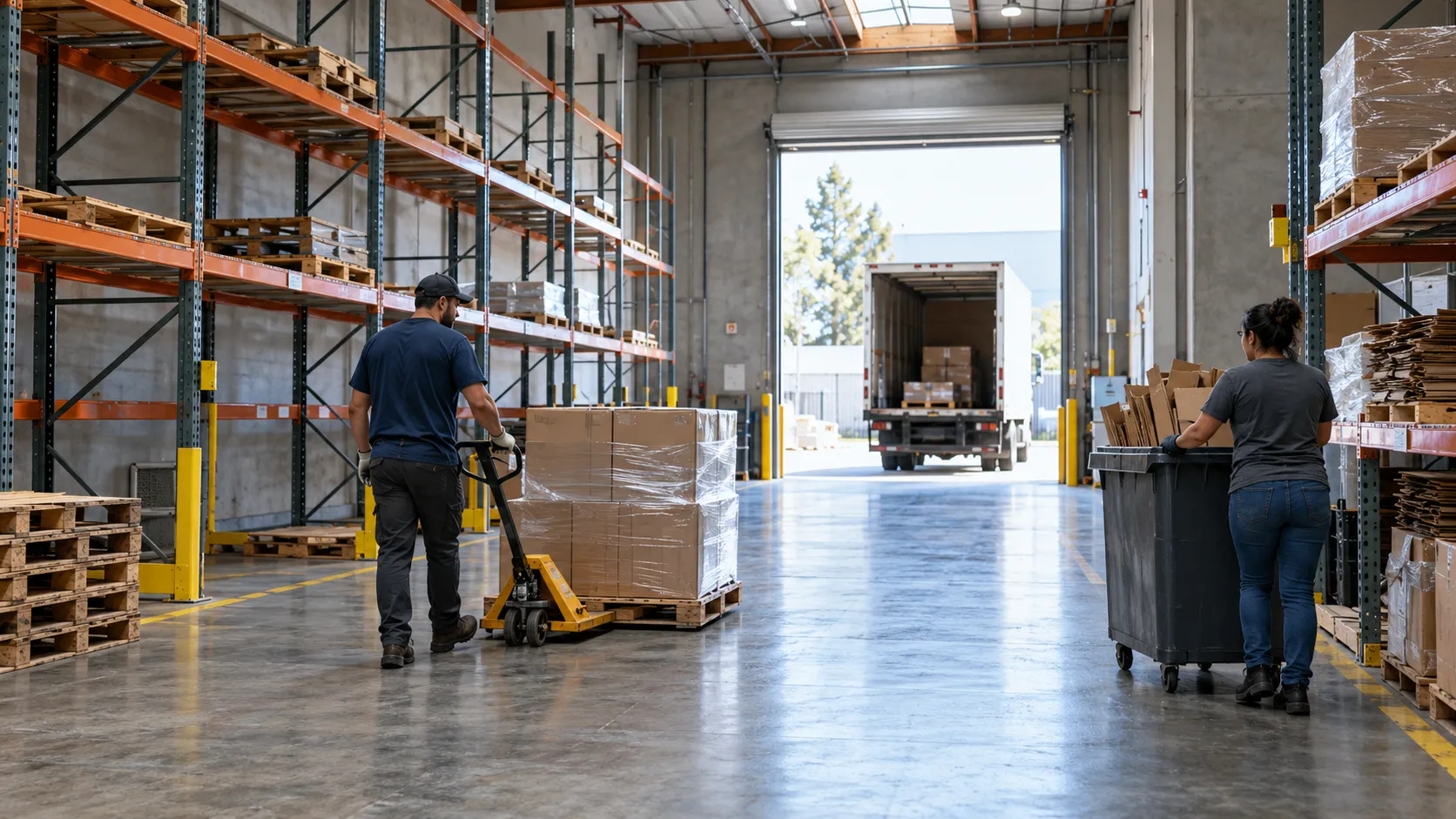
A warehouse cleanout can stall when remove, retain, and unknown materials share the same aisle. Establish zones first and keep one travel lane protected from staging through loading.
Set the floor before the crew arrives
- Mark retain, approved removal, recycling review, and do-not-move zones.
- Identify installed racking, powered equipment, batteries, cylinders, liquids, and unknown products.
- Confirm dock access, trailer position, forklift rules, and who may operate site equipment.
- Assign one person who can answer ownership and scope questions.
Do not treat every pallet as ordinary junk
Closed drums, chemicals, damaged batteries, pressurized containers, and unidentified products should never be mixed into a general cleanout pile. OSHA also advises matching material-handling equipment to the load’s weight, size, and shape. Review OSHA’s materials-handling guidance before assigning internal staff to move bulky items.
Map flow before adding labor
Draw a simple plan showing the approved staging zones, pedestrian route, powered-equipment route, loading position, emergency exits, and areas that remain operational. The route should be wide enough for the selected carts or handling equipment and should not cross an active dock position without a traffic-control plan. Share the map during the pre-job walk so supervisors and crew use the same assumptions.
Separate by decision, not appearance
A pallet of ordinary packaging can sit beside batteries, aerosols, returns, or unknown production material. Use labels that describe the decision: retain, remove, recycle review, vendor return, hazardous-material review, and do not move. Do not rely on location alone. Closed containers and damaged products should remain isolated until the business identifies them and confirms an appropriate handler.
Check weight and equipment limits
Record known weights for machinery, safes, dense parts, and loaded cabinets. Verify the capacity of pallet jacks, lift gates, dock plates, elevators, ramps, and any site equipment proposed for the job. Only trained and authorized people should operate powered industrial equipment. If the crew cannot verify weight or a stable lifting point, the item needs a separate plan.
Keep the handoff controlled
- Schedule around receiving and outbound freight.
- Assign a spotter where visibility is limited.
- Keep fire aisles, electrical panels, and eyewash or emergency equipment accessible.
- Count reusable pallets, rental assets, and retained materials before loading begins.
Finish with a dock and aisle walk. Remove loose wrapping, banding, and trip hazards, then compare the cleared zones with the approved inventory and note every exception.
Next step
Review the companion warehouse cleanout service, then use the commercial estimate checklist to prepare the job details.