What to separate before a retail store cleanout
Sort inventory, landlord property, electronics, fixtures, and general removal items before the handoff date.
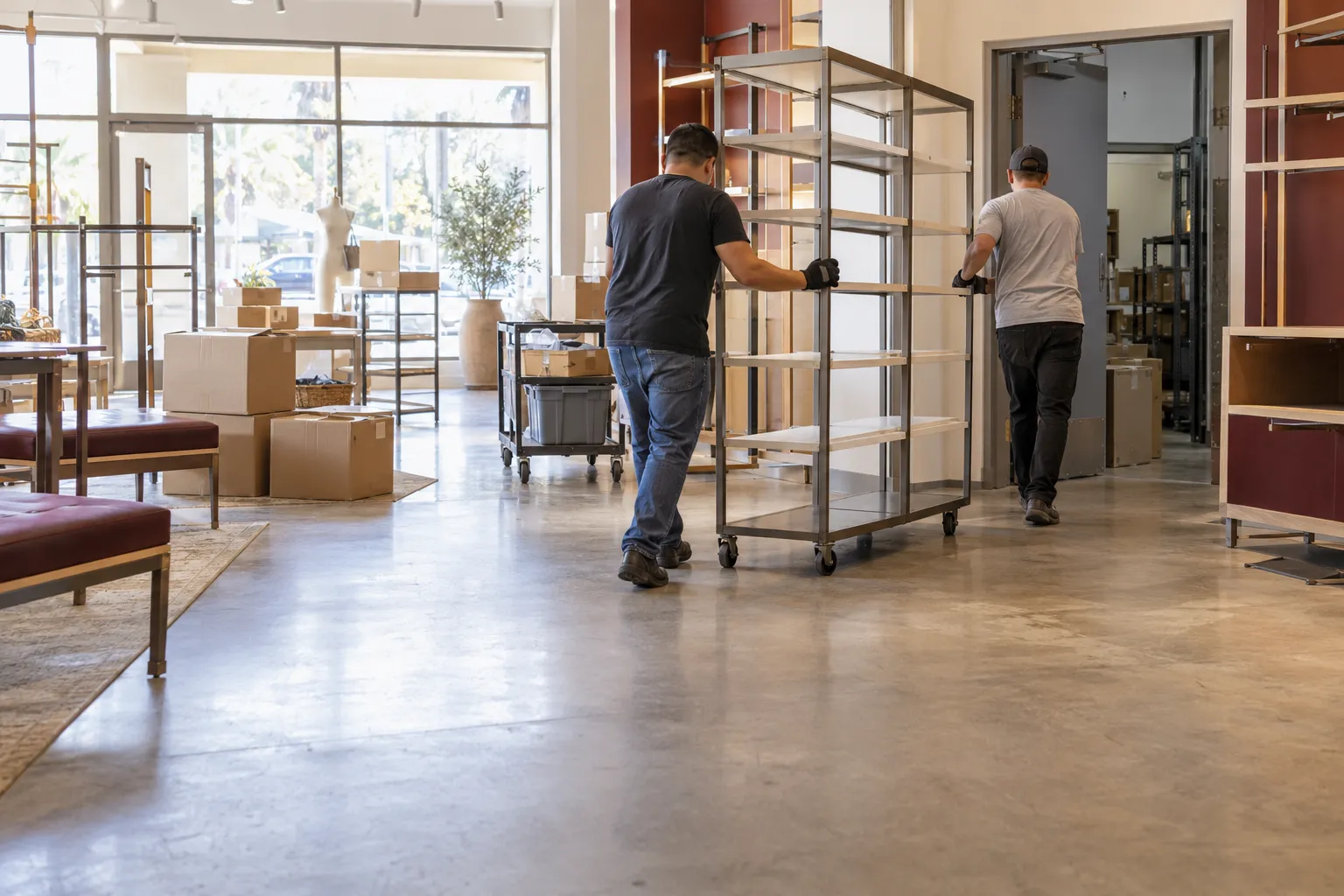
Retail spaces mix business-owned inventory, landlord fixtures, vendor displays, electronics, signs, and general contents. Put each category on a written decision list before anything moves.
Five groups that prevent expensive mistakes
- Sell or transfer: usable inventory and equipment moving to another location.
- Return: leased point-of-sale hardware, coolers, vendor displays, and rented equipment.
- Stay: landlord-owned fixtures or items required by the lease.
- Special handling: electronics, lamps, batteries, chemicals, food, liquids, and refrigerant equipment.
- Approved removal: the freestanding fixtures, furniture, packaging, and contents in the quoted scope.
Walk the route after sorting
Check door widths, thresholds, customer entrances, rear corridors, loading zones, and trading hours. Keep exit paths open and schedule noisy or obstructive work outside customer hours when the property allows it.
Turn the lease and fixture list into a removal plan
Start with the lease, turnover checklist, and any landlord correspondence. Retail interiors often combine tenant furniture with attached counters, lighting, alarm components, refrigeration, signs, and branded vendor displays. Mark each item as business-owned, landlord-owned, leased, vendor-owned, or unresolved. Do not let an unlabeled fixture enter the removal stream simply because the store is closing.
Inventory and donation decisions
Finish stock transfers, returns, and donation approvals before the crew arrives. Open cartons should show their contents; sealed cartons should have an owner and destination. Food, cosmetics, aerosols, cleaning products, batteries, and liquids need separate review. If usable goods are being donated, confirm acceptance, quantities, and delivery timing directly with the receiving organization rather than assuming every item will be accepted.
Coordinate around the property
Shopping centers and mixed-use properties may restrict truck location, cart routes, doors, work hours, and temporary exterior staging. Confirm those rules in writing. Protect public entrances and keep customers away from the carry path. For a store that remains open, divide the job into zones and return each zone to a safe condition before moving to the next.
Closeout checks
- Remove account information from point-of-sale devices and return leased hardware.
- Confirm who handles attached signage, security hardware, and utility disconnection.
- Photograph retained landlord property and unresolved items.
- Walk the sales floor, stockroom, office, restroom, and exterior service area.
When the turnover date is firm, leave contingency time for items that need a specialty trade or a different waste stream. A cleanout crew should not improvise around refrigerants, chemicals, or connected equipment.
Next step
Review the companion retail store cleanout service, then use the commercial estimate checklist to prepare the job details.