Measure the removal route before moving commercial furniture
A simple measurement guide for doors, elevators, turns, loading areas, and disassembly decisions.
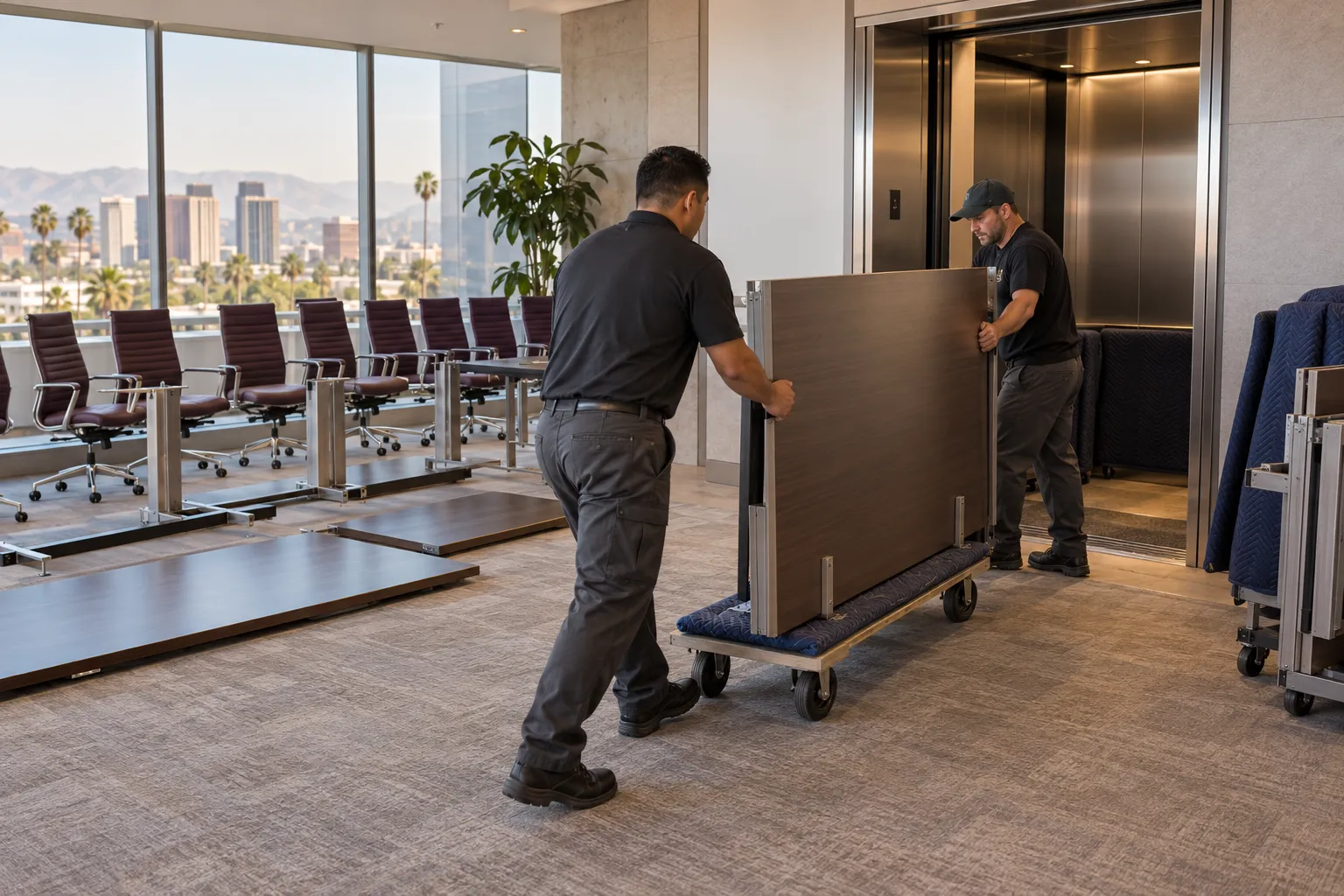
Measure the item and the entire route. A conference table that fits the elevator may still fail at the doorway, a tight turn, or the loading entrance.
Record these dimensions
| Item | Route |
|---|---|
| Length, width, height, weight if known, removable parts | Clear doorway width and height |
| Largest component after planned disassembly | Elevator door and cab, stair width, landings, tightest turn |
| Fragile materials such as glass or stone | Thresholds, ramps, dock plate, and vehicle approach |
Empty, unlock, and identify
Empty filing cabinets and storage furniture. Remove keys and personal contents. Confirm whether the item is owned, leased, or attached to the building. Do not disassemble powered, plumbed, or built-in equipment unless the appropriate trade has made it safe.
For bulky loads that cannot be grasped or seen around safely, OSHA recommends seeking help and using suitable handling equipment rather than forcing a manual lift.
Measure more than the doorway
Record the clear opening after door hardware, closers, stops, and protective coverings are considered. For elevators, note the door width and height, cab depth, ceiling height, handrails, weight rating, and the reservation window. On stairs, measure the narrowest width, landing depth, overhead clearance, and turning space. A route can fail at a corner even when every straight opening is wide enough.
Choose the orientation on paper
Compare the item’s three dimensions with the route in each practical orientation. Identify removable legs, tops, drawers, shelves, and glass panels, then measure the largest remaining component. Photograph unusual joints before disassembly and place fasteners in labeled bags. Modular systems should be grouped by station or room so reusable parts are not mixed into the removal load.
Review material and handling risks
Stone, glass, metal cabinets, and powered sit-stand desks require different handling decisions. Empty drawers and cabinets; secure moving parts; lower adjustable surfaces; and disconnect power according to the manufacturer or a qualified trade. Do not assume a cabinet is light because it is small, or that a tabletop is ordinary glass.
Protect the property and the schedule
- Confirm floor, wall, and elevator protection requirements with management.
- Keep an alternate route for occupants and emergency access.
- Reserve loading space long enough for disassembly and cart travel.
- Mark furniture that stays before movers enter the room.
Use the route sheet during the estimate and again on removal day. If the building condition, elevator assignment, or vehicle position changes, pause and confirm that the planned method still works.
Next step
Review the companion commercial furniture removal service, then use the commercial estimate checklist to prepare the job details.